
When you watch a team match broadcast, the moment that most often stops you is not the fifth move. It is the small ceremony before the game seems to begin: why someone places three stones, why the opponent may swap colors, why a first move near tengen still has not entered the familiar rhythm of Gomoku. In August 2026, according to the RenjuNet schedule, the World Team Gomoku Championship will be held in Yerevan, Armenia. The most useful lesson before it starts is not a string of memorized patterns. It is understanding Swap2. It makes the opening less of a head start, and more of an act of restraint.
Swap2 Is Not About Complexity. It Is About First-Move Comfort.
In ordinary Gomoku, Black moves first. If that first stone lands near the center, it naturally reaches in more directions, making it easier to build an open three, a double-three, or a sequence of forcing threats. If you watch only by the instinct of “my turn, your turn,” Black can look as if it has been handed a wider piece of cloth.
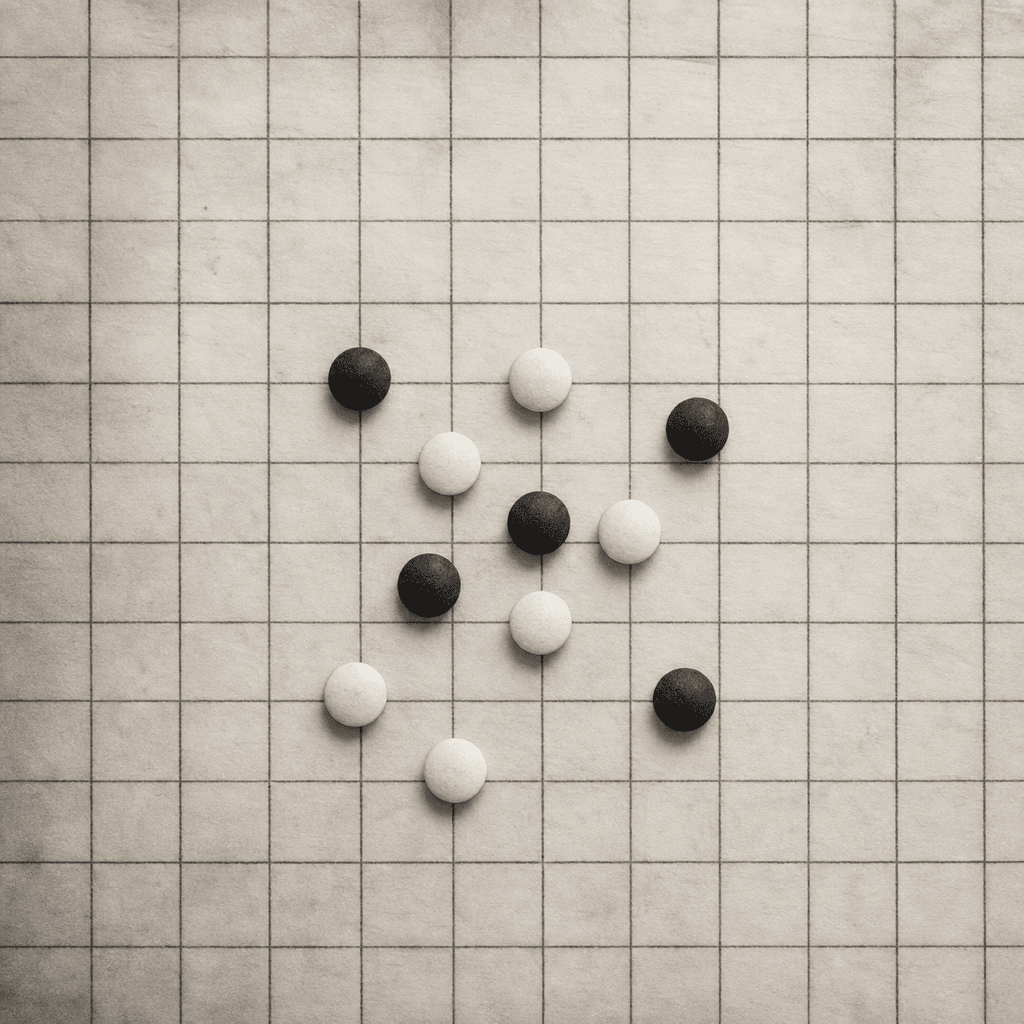
Swap2 begins from a plain idea: if the first player has an advantage, the opener cannot be allowed to serve only themselves. Under the RIF explanation of the Swap2 rule, the opening player first places three stones on the board, usually two black and one white. The other player may then choose to play Black, choose to play White, or ask for two more stones before making the final choice.
That step changes the feel of the opening. The first player can no longer set up a position that is obviously good for Black, because the opponent can simply take Black. Nor can they make White too comfortable, because the opponent can choose White. A good opening is like a well-made object: calm at the edges, weight inside.
The First Player Is Really Writing an Invitation
Many players first learn Swap2 by treating the three stones as “my opening.” That is dangerous. A better description is this: you are writing an invitation. Your opponent can accept it, or turn it back on you.
Suppose you place a shape that lets Black easily create a chain of open threes. Your opponent will probably choose Black. You thought you had designed an attack. In fact, you gave it away. Conversely, if the three stones are too loose and White feels no pressure, your opponent may simply take White and leave you, as Black, trying to repair an opening that was never finely made.
So the first player’s aim is not to make something strong. It is to make something hard to choose. The position needs elasticity: Black has routes, but not an obvious win; White has room to defend, but cannot simply lie still and wait. This is where Swap2 gets its beauty. Beauty is reason enough, but in Swap2 it must survive the choice.
A good opening is not strong. It is hard to choose.
The Second Player’s Three Choices Are Three Judgments
After seeing the three stones, the second player has three paths: take Black, take White, or ask the first player to add two more stones. You do not need to think of this as a thicket of variations. Start with the simpler question: do these three stones clearly favor one side?
If Black is already near the center, has many lines, and can easily create an open three, you may consider taking Black. If White’s stone neatly restricts Black’s main line, and Black seems to move first but is cramped everywhere, you may take White. If neither side is clear, or if you suspect a trap in the three stones, you choose the third path: ask for two more.
“Two more stones” is not a delay. It is a way of making the other player reveal intent. After five stones, the shape becomes more specific: who is fighting for the center, who is building on the flank, who has left the shadow of a four-in-a-row. You are not guessing at style. You are reading structure.
To Read a Swap2 Opening, Look at the Center First
Beginners often judge an opening by how close the stones are to one another. Stronger players care more about direction. A stone near the center does not merely occupy a point. It reaches horizontally, vertically, and along both diagonals, leaving more possible connections for later.
Consider a concrete scene: two black stones sit near tengen, while one white stone is pressed beside them. On the surface, White has already “blocked” Black. But if Black still has two open directions, the next move may produce an open three. Do not ask only, “Has it been blocked?” Ask, “How many roads remain?”
This is also why Swap2 makes the first move more restrained. Traditional instinct encourages you to place the stone where it feels best. Swap2 reminds you that whatever feels too good can be taken by someone else. The board becomes more modern that way, and calmer.
Double-Three Is Not a Slogan. It Is an Alarm.
In Swap2, the double-three often functions as an alarm. At the three-stone stage, a double-three may not yet exist, but you should ask whether it can appear within one or two moves. If Black needs only a natural follow-up to threaten two open-three lines at once, the opening may well favor Black.
The reverse is also true. If the supposed double-three requires a long detour and White’s cooperation, it is not a real threat. Do not be frightened by shape alone. What matters is tempo: when Black creates a threat, does White have enough time to hold down both lines?
The same applies to a four-in-a-row. A four-in-a-row that appears too early is often only a single-line forcing move. If no second threat follows, it soon goes quiet. In a Swap2 opening, you are not listening for one loud sound. You are listening for whether it echoes.
Why the World Team Championship Makes Swap2 Worth Learning Now
In a team event, the opening is not only a choice between two players. It also shapes the mood of the whole match. According to RenjuNet tournament 3565, the World Team Gomoku Championship 2026 is scheduled for August 2026 in Yerevan. If you understand Swap2 before the event, the first three stones on every board become easier to enter.
This is not an isolated rule. The Gomoku World Championship system has used Swap2 for a long time; the 2026 announcement from Gomocup also notes that its unlimited tournament follows Gomoku World Championships and uses Swap2. In other words, Swap2 has become one of the core opening languages of modern competitive Gomoku.
Once you know what it is trying to balance, you stop seeing the first few moves as ritual. They are negotiation, probing, and also a kind of taste: who is willing to leave a position both sides can play, and who has hidden something sharp in a small detail.
Swap2 teaches the first move humility.
Before the Tournament, Turn the Rule Into Instinct
If you only want a quick lesson before the Team Worlds, you do not need to memorize dozens of opening names. Choose three games played with Swap2. Cover the actual choice and look only at the first three stones. Ask the same question each time: would I take Black, take White, or ask for two more?
Then look at the position after five stones and change your answer if you need to. You will notice that many mistakes are not failures of calculation, but failures of sight: seeing the nearest connection and forgetting the center; seeing one four-in-a-row and forgetting the next open three; seeing only what you want to play and forgetting that your opponent can swap colors.
When the clocks in Yerevan finally start, you will read the opening with more ease. Do not rush to predict the result. First watch how those three stones invite, hesitate, and slowly polish a game into being. Before the tournament, one game of Swap2 is enough to begin quietly.