
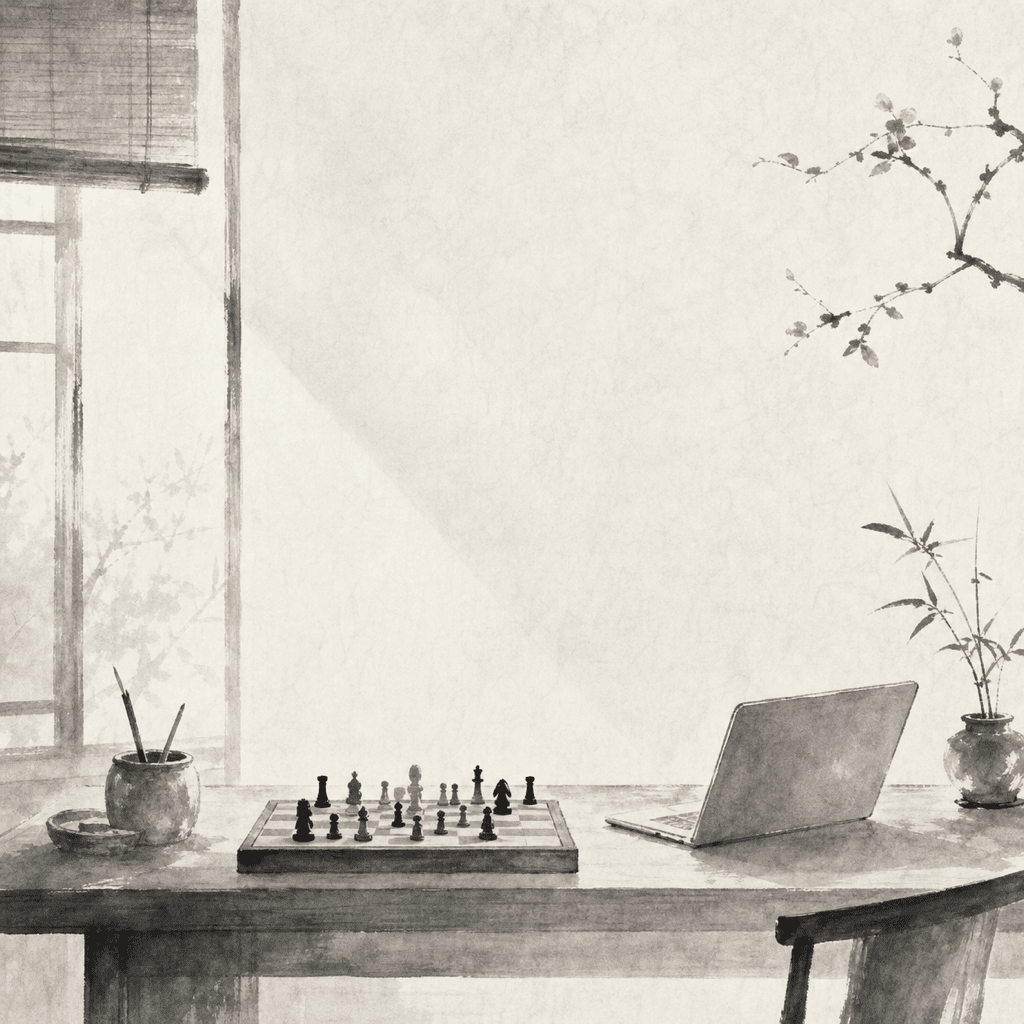
As registration nears its deadline, the thing most likely to unsettle you is usually not playing strength. It is an account that has not been created, a camera at the wrong angle, or a schedule no one has confirmed. Registration for the 2026 online World Renju and Gomoku Youth Cup closes on July 20, with play running from July 24 to 30. There is not much time left to turn the details into calm.
First, remember this is not a casual online game
According to the RenjuNet tournament page, the World Renju and Gomoku Youth Cup is an online event, listed as Tallinn/online and organized by RIF, vint.ee and the Estonian Renju Union. Games are played on vint.ee, spectators watch via Twitch, and players and coaches use Zoom.
The format is not the rhythm of an improvised friendly game, either. The opening rule is Taraguchi-10, the system is Swiss, and the time control is 30 minutes per player with a 5-second increment per move. In other words, you are preparing not only your moves, but also your network, equipment, sense of time and playing space.
Make the vint.ee account match-ready before the deadline
In an online tournament, the first stone often lands not on the board, but inside the account. Each player needs a vint.ee username and profile. If the account is created too close to the event, the avatar, nickname, profile details and login status can all become unnecessary noise.
Young players are especially prone to confusing “I can play” with “I am ready to compete.” The first is chess strength. The second is procedure. Handle the account early, and on match day the attention can return to the shape of the position.
The camera is part of the tournament’s order
The event notes say that the playing location needs a responsible coach and camera coverage. The point is not to create tension. It is to make every game take place in an environment that can be trusted: who is present, whether the player is thinking independently, whether the screen and space are clear.
I would suggest running a “mock game” in advance: open the computer, set the camera, have the child sit in the formal playing position, and remain quietly there for 10 minutes under tournament conditions. You will quickly see whether the lens is backlit, whether the microphone picks up noise from the next room, and whether the chair height makes the player keep shifting around.
Details like these look minor. They can still affect the quality of a move. The most refined pre-tournament preparation is not adding more things to the desk. It is removing, one by one, the things that interrupt thought.
A sense of order protects playing strength.
Rebuild the schedule around family life
The tournament runs from July 24 to 30, a full week. For a young player, this is not “finding time for a game one day.” It is a rhythm that has to work with sleep, meals, classes or holiday plans.
Parents can put the schedule into the calendar first, then work backward to set meal times, rest and login windows. Coaches should confirm the gathering plan in advance: will players compete together in one location, or separately from home? If the club is gathering, who takes attendance, who handles equipment, and who keeps the post-game notes?
In a Swiss event, Round 1 does not decide the week
The beauty of the Swiss system is that one opening mistake does not immediately write the story of the whole tournament. Winning the first round does not mean you can relax. Losing it does not mean the rest is only consolation.
I have noticed that young players in online events tend to swing between two moods: after a win, they rush to prove themselves; after a loss, they rush to win it back. A steadier method is to record only three things after each game: the opening choice, one open three chance missed in the middlegame, and the judgment made in the final countdown. That is enough.
Taraguchi-10 trains choices, not just memory
For a child entering an international online event for the first time, Taraguchi-10 can feel like a doorway with finer rules. Memorizing a few variations helps, of course. But the more important skill is knowing what kind of space each choice creates: the center becomes thicker, the edge becomes narrower, diagonals hide threats more easily.
There is no need to grind problems frantically in the final days. Choose two or three common opening positions, play each to around move 12, then stop and ask: what does each side want most? If the child can say, “double-three is dangerous here,” “the closed three needs to be answered first,” or “that four-in-a-row is too early,” the training has already returned to the essence of the game.
An opening is not recitation. It is choice.
A physical board still belongs nearby
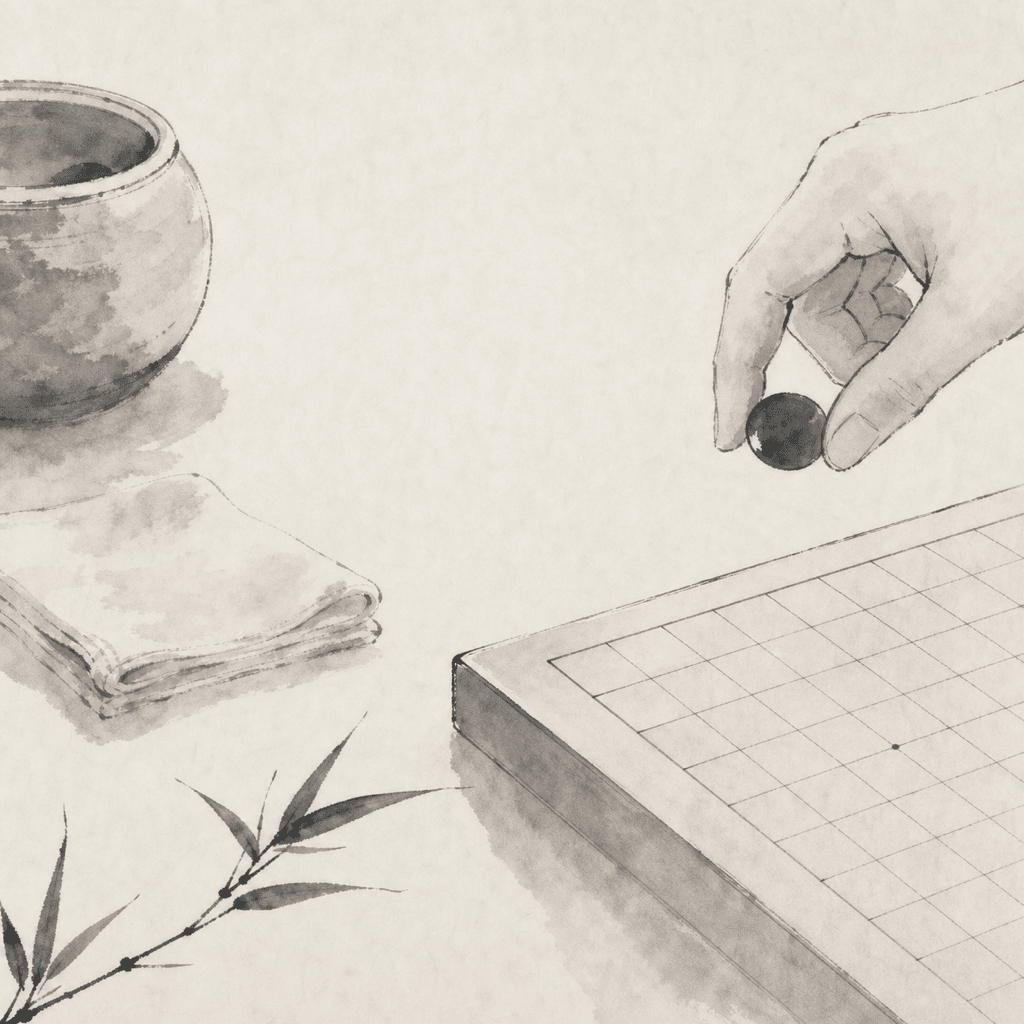
The games are played on vint.ee, but the physical board has not lost its purpose. The screen is good for execution. A wooden or matte board is good for review. When fingers place the stones back one by one, many directions missed online begin to reappear.
After a game, do not immediately ask, “Why did you lose?” First set up the key position and let the child reconstruct three to five moves. The action is slow, but tactile. It takes the result out of emotion and puts it back on the board.
Before the final day, prepare a quiet opening ritual
Before registration closes on July 20, the most practical preparation is to finish the account, profile, coach confirmation, camera position, network test and schedule calendar. The rules and times listed on the RenjuNet tournament page are the baseline for checking all of it.
Once that is done, leave room for a small opening ritual: clear the desk the day before the tournament, set out the board, turn off extra notifications, and play one unscored practice game. Do not make it grand. Just try one quiet game, and let the tournament begin with a calm gesture.