
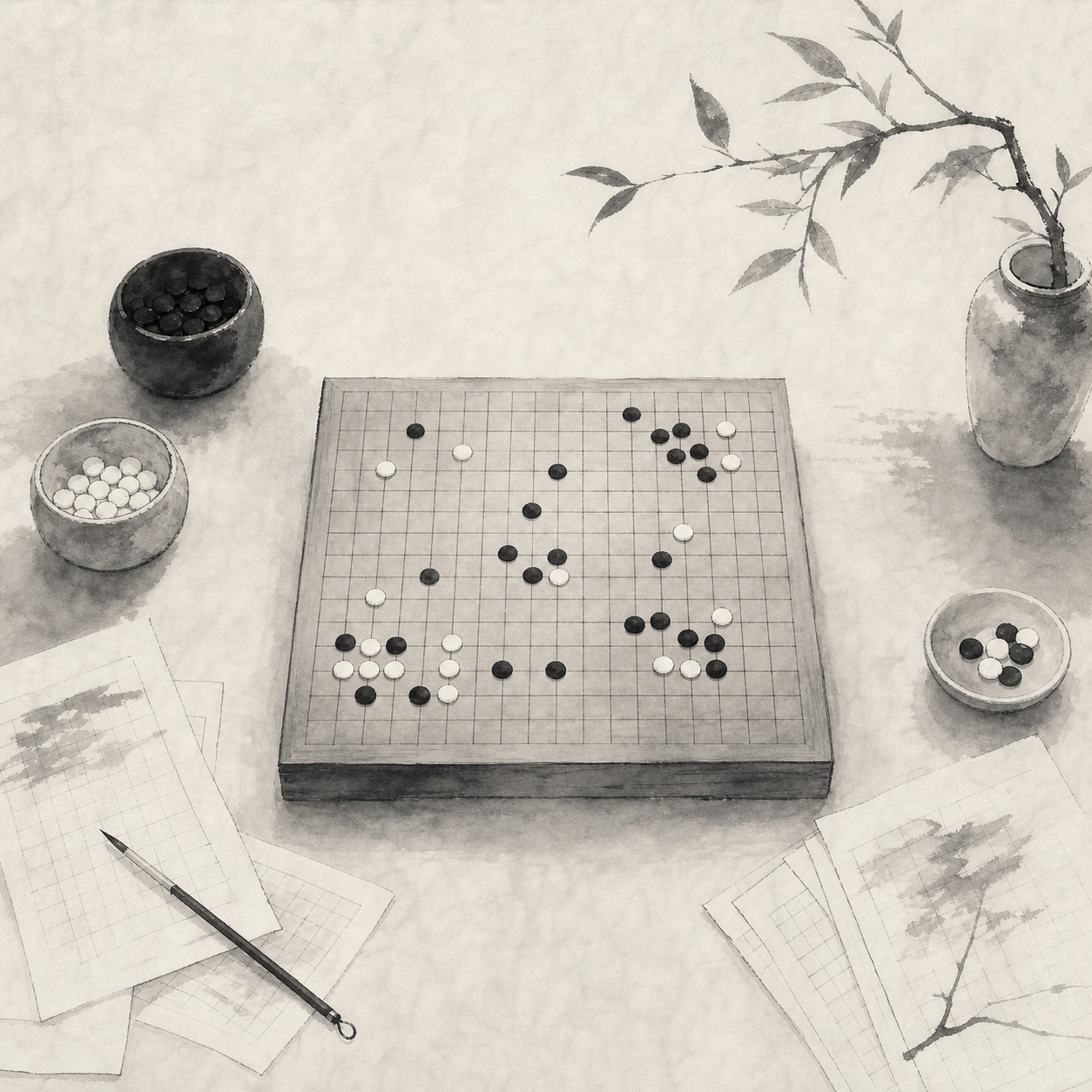
You may have already seen the schedule. You may not yet know what to watch in the first game. In August 2026, the Gomoku Team World Championship will begin in Yerevan, Armenia. What changes the way you watch in advance is not only the place or the date, but the line in the rules column: Swap 2.
This is not tournament news meant only to be bookmarked. The pleasure of a team event often hides in the minutes before the opening settles: who places the first three stones, who chooses black or white, who dares to hand the position over to a teammate’s judgment. Understand the rule first, and the game becomes calmer, and more tactile.
The dates are set: August 15 to 19, 2026
According to the RenjuNet tournament page, the Gomoku Team World Championship 2026 will be held from August 15 to 19, 2026, at the Chess House in Yerevan, Armenia, at 50a Khanjyan Street. The organizers are listed as RIF and the Armenian Renju Federation.
These details are plain, but they are enough to put the event on a real calendar. Five days. Teams. A world championship. A fixed venue. This is not a casual online pairing; it asks a team to bring its players, its form, and its preparation into the same room.
It is not an individual event: four players per team, with up to two substitutes
The official information is clear: each team consists of 4 players and may bring up to 2 substitutes. That number changes many of the small things. In an individual event, you only have to understand one player’s style. In a team event, you watch how a whole side allocates risk.
Against the same tengen opening, for instance, one player may gladly enter familiar theory early, while another may push the position toward a more open middlegame. When four boards are running at once, the choice on any one board is not isolated. It may be securing stability for the team, or it may be deliberately creating winning chances.
Swap 2 makes the first move more than first-player advantage
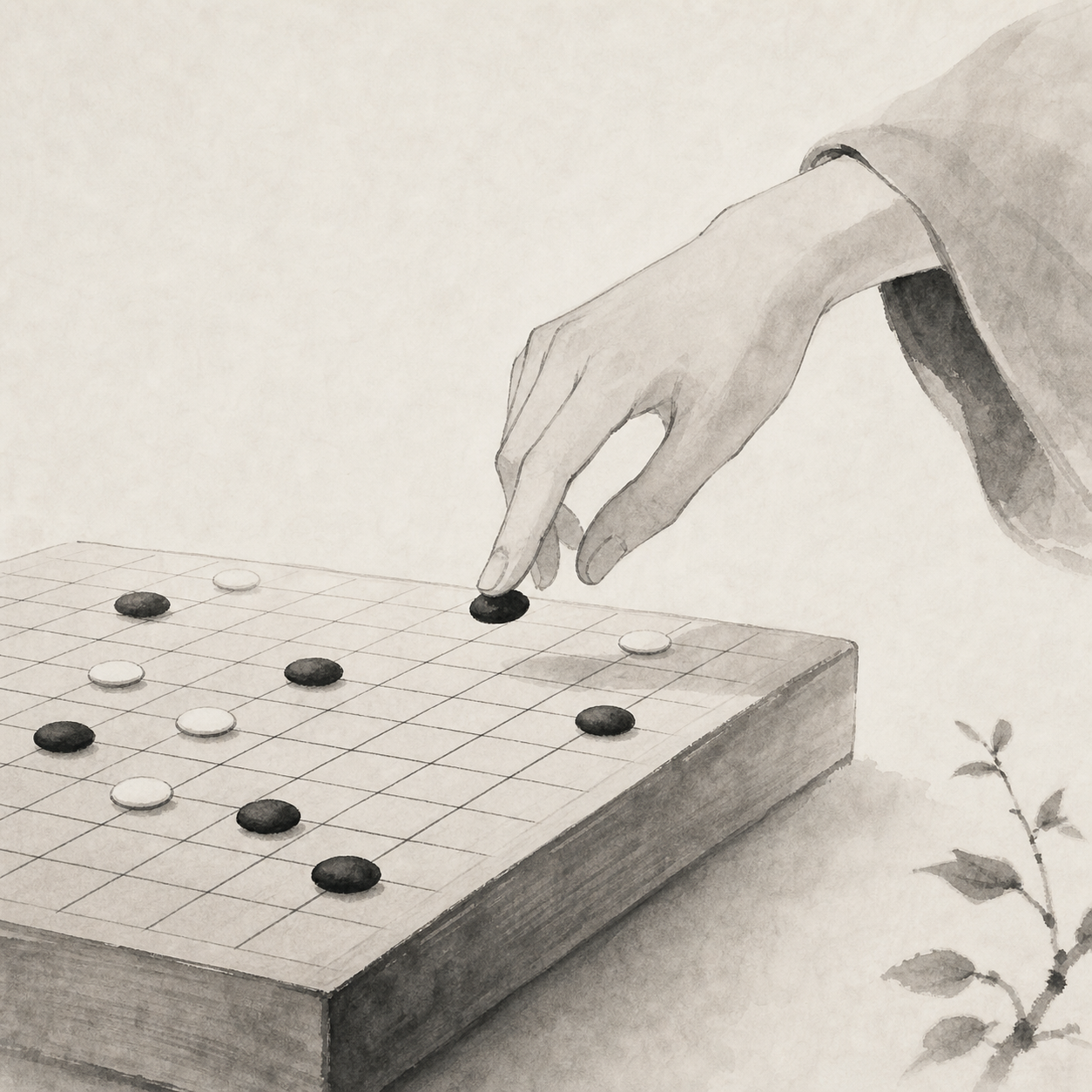
The core of Swap 2 can be found in RenjuNet’s rule description: the opening player first places three stones on the board, two black and one white. The other player may then choose to play black, choose to play white, or ask the opener to add one more black stone and one more white stone before deciding colors.
That turns the first move into a proposal, not a simple claim. Make it too strong, and your opponent can simply take the favorable side. Make it too soft, and your opponent may ask you to add two more stones, forcing the position into a finer judgment. It is restrained, and it is elegant.
The opening is not a claim of space. It is a bid.
When you watch, start with one small question: are the first three stones tempting? Tempting does not necessarily mean they create an open three right away. It means they make the opponent think, “I can handle this.” If neither side wants to take the offer lightly, the opener has already shaved uncertainty very thin.
A single round-robin magnifies every board’s steadiness
The tournament page lists the format as single round-robin. Every team plays every other team once. It lacks the abrupt drama of a knockout, but it offers a clearer long-range comparison. Stability is not conservatism. It is the ability, over several days, to keep handling difficult positions properly.
In this format, a sudden error on board one will be recorded, and a steady half-point on board two can become precious. Do not watch only the wins. Some draws are a team holding its rhythm under pressure. They are quiet, but they matter.
120 minutes plus 30 seconds will reveal the middlegame work
The time control for this event is 120 minutes, with a 30-second increment per move. That is not a hurried pace. It gives players time to unpack chains of double-threes, four-in-a-row threats, and blocked threes, and it gives spectators a chance to follow the position’s breathing.
In fast games, a beautiful move often flashes. In long games, a beautiful move looks more like texture. You can see why a player keeps declining to push, why they prefer to cover a point that looks modest rather than allow the opponent a sequence of threats. Beauty is reason enough to watch, but behind it there is usually patience.
For a team match, start by watching three opening signals
First, see whether the three-stone structure sits near tengen. The closer it is to the center, the denser the variations usually are; if it drifts away, the idea may be to avoid familiar paths and make the opponent judge from the first move. Second, look for whether the three stones leave room to form an immediate open three.
Third, after the opener is asked to add two stones, see whether the position still stays balanced. This is where Swap 2 is most interesting: some three-stone positions look mild, then turn sharp after the two extra stones; some openings look forceful, only to be quietly neutralized by the player choosing colors.
What is worth saving now is not only the tournament page
If you want to follow the official information, start by bookmarking RenjuNet’s page for this event, then keep an eye on the list of recent and upcoming tournaments. These two pages are closer to the source than retellings, and better suited for checking the rules, venue, and format before play begins.
There is still time before August 2026. Because there is time, it is worth preparing slowly: understand Swap 2 first, then watch a few team-event game records, and finally return to the board and try one yourself. When the tournament actually begins, you will see not just stones being placed, but a team speaking its first move aloud.
Understand the rules first, and the game grows quiet