
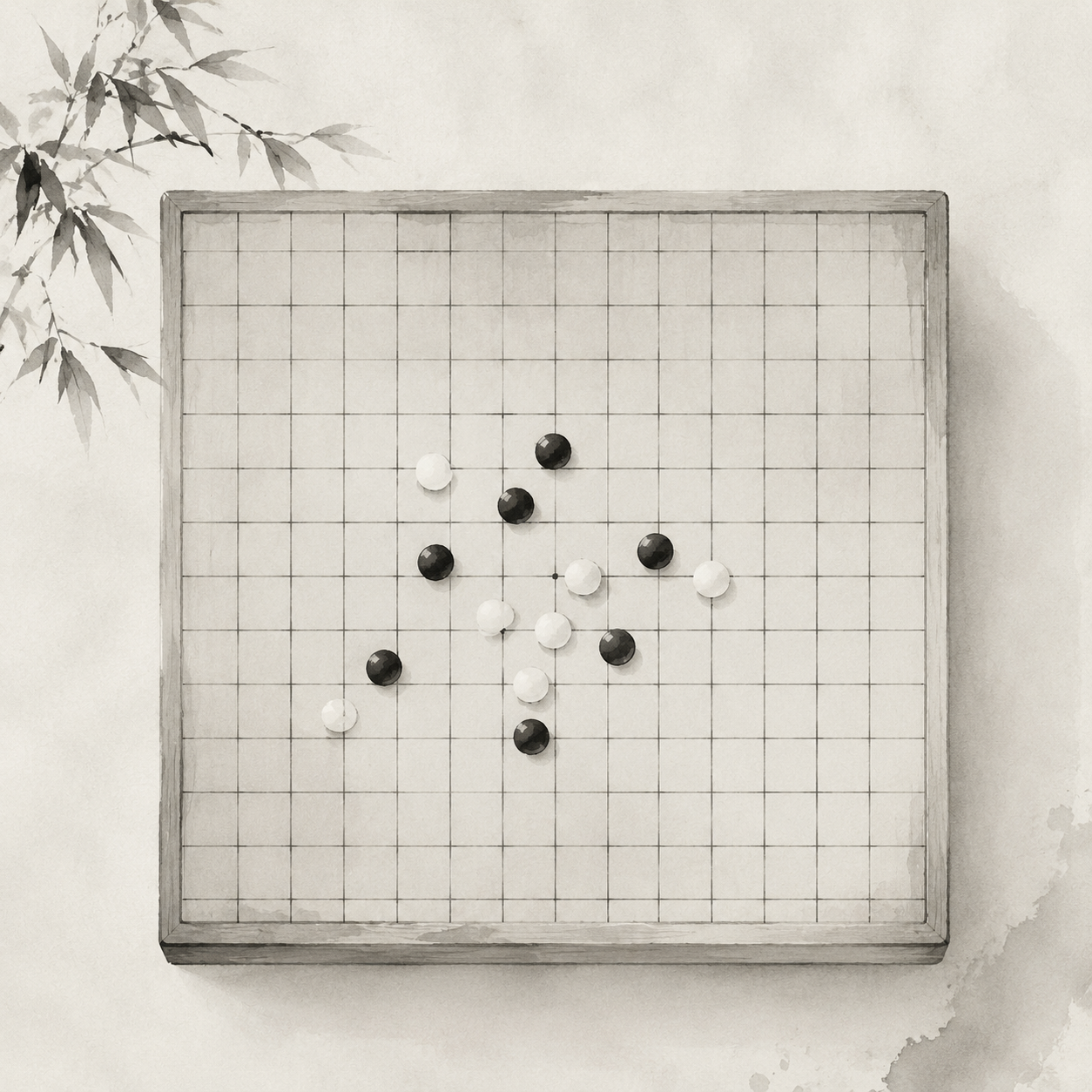
When you watch high-level Gomoku, the easiest thing to fix on is who reads deeper. But in a program tournament like Gomocup 2026, what quietly holds the match together often comes earlier: opening design. It does not announce itself. It decides where the game begins, how it unfolds, and whether a spectator can see the small differences that matter.
This Year Was Not Just About Stronger Programs
Gomocup 2026 concluded after running from June 5 to 7. According to the official results page, this year’s event used four identical Tencent Cloud servers running Windows Server 2025, on an AMD EPYC platform with 32 vCPUs and 64GB of RAM. The tournament continued to cover several rule sets, including freestyle, standard, Renju, and caro.
That can sound like technical appendix material. It is not. Those details level the computing power, the runtime environment, and the rule boundaries before different programs are allowed to speak on the same board. For an ordinary player, there is a reminder here: the quality of a game does not come only from middlegame calculation. It also comes from the order established before the opening move.
Twelve Opening Sets Are a Gentle Control Variable
The official notes say that in recent years Gomocup has prepared 12 opening sets for each rule. The 2026 openings were selected with input from Alexander Bogatirev, Shu Zijun, and Wang Qichao, whose backgrounds span Gomoku organization, AI research, and Renju opening study.
The beauty of this is its restraint. The organizers did not send programs into a completely blank board to feel each other out. Nor did they freeze every game into a single problem. Instead, they offered a carefully chosen set of starting points. Each one is like a small stone placed softly into water: it limits noise, while leaving room for variation.
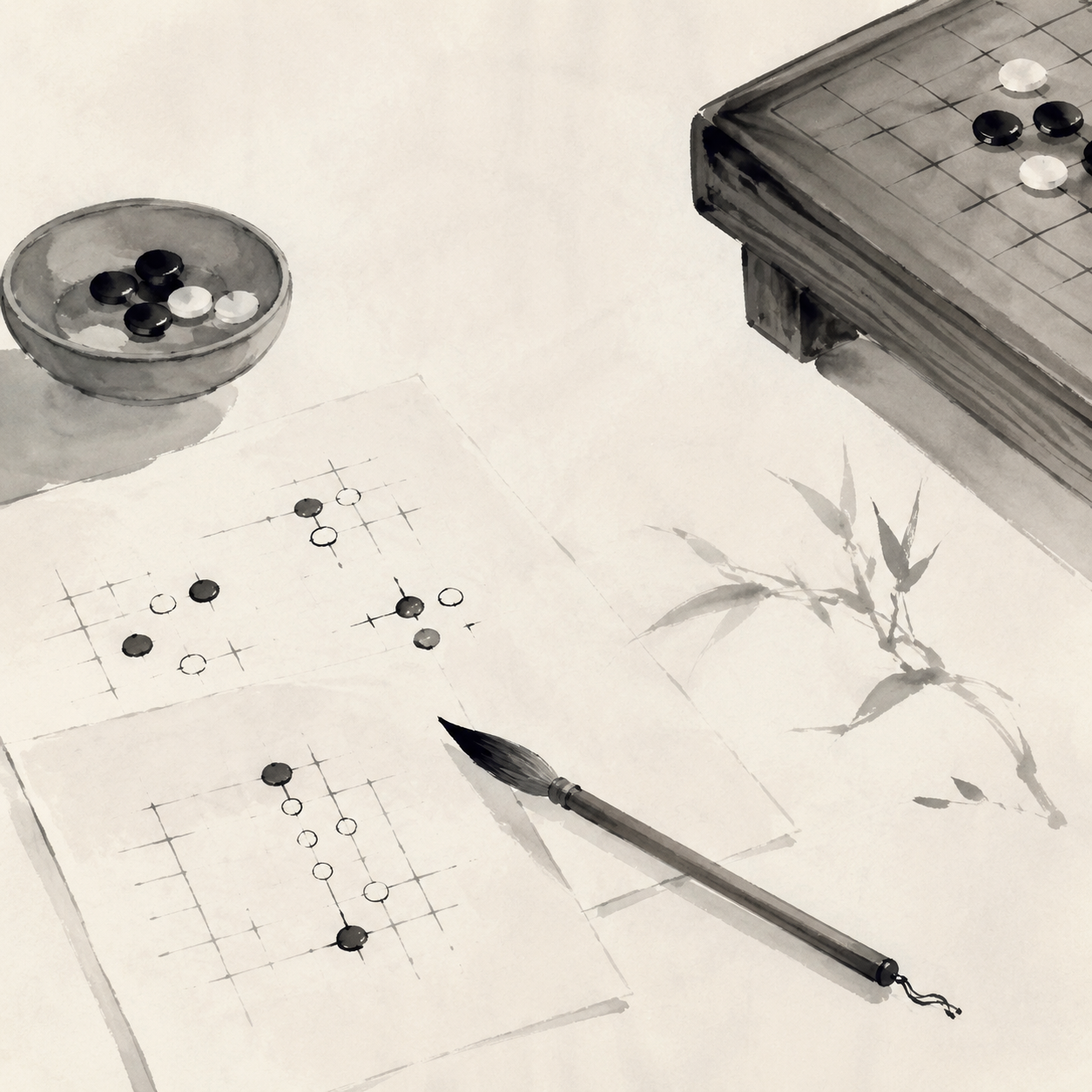
The quieter the opening, the clearer the difference.
Opening Design Serves Fairness First
In Gomoku, first-move advantage has never been a small issue. Professional Renju developed forbidden moves and complex opening rules precisely to bring Black’s and White’s chances closer together. Program tournaments look different, but they face a similar problem: if the starting point is too lopsided, the result may be decided by the problem itself rather than by the choices that follow.
Gomocup’s multi-opening arrangement is, at its core, a way of handling fairness. It tests competing programs again and again across different shapes, reducing the accident of any single opening. Bring that idea back to your own games and the same principle appears: do not always begin from the move you know best. Change the starting points, and you will see your real weaknesses more clearly.
Then It Makes the Game Easier to Read
Legibility is not a low-level need. The more complex a game becomes, the more it needs a clear entry point. If the opening is too random, the spectator cannot tell where the later brilliance came from. If the opening is too prescribed, the game begins to feel like an answer key. Good design sits in the middle: it tells you what the question is, without answering for the player.
That is also the board temperament WUZIQI has always preferred: calm, modern, restrained. When the interface competes less for attention, the shape of the stones has more air. Opening problems work the same way. They are not there to display the organizer’s hand. They are there to make the game itself clearer.
The More Rules There Are, the Less Noise You Need
The 2026 announcement also included some less conspicuous but very practical constraints: programs needed to run on a clean Windows system, the ordinary group had memory and size limits, and specific rule sets could be separated through different executable files. These requirements may look like engineering details, but they share an aesthetic with the board.
Limits are not there to make things harder. They are there to make comparison possible. A clean environment, a clear naming scheme, a reproducible run, these are like the straight horizontal and vertical lines on the board. You can borrow the same method in your own play: state the rules before you argue over the result; remove the noise before you study the choices.
It Also Asks Us to Rethink What Looks Good
“Good-looking” is not just a matter of a pretty image. For a game, it means the relationships are clear, the rhythm is right, and every move has a reason you can trace. Seen alone, Gomocup’s opening diagrams may look like a handful of stones scattered across a grid. Inside the tournament, they become order.
That is part of what makes Gomoku so compelling. The materials are minimal, black and white stones, intersecting lines, alternating moves, yet a slight adjustment in the opening can produce an entirely different character. Beauty is reason enough. But in a game, beauty often also means that something has become easier to understand.
What an Ordinary Player Can Take Away
First, design problem settings for yourself in practice. Do not always start casually from an empty board; choose a few fixed shapes and work with them for several days. Second, when you review, ask whether the opening carried you into a familiar routine. If it did, change the entrance. Third, when you watch a match, do not wait only for the result. Look first at the starting points the organizers have given.
These are small actions, but they change the way you watch a game. You move gradually from “that was a strong move” toward “why did this game arrive here?” At that moment, the opening is no longer just the first few moves. It is a form of design.
A Quiet Game Begins at the Starting Point
The results of Gomocup 2026 belong, of course, to the programs, their authors, and the organizers. But shift your gaze slightly and another layer comes into view: how the tournament uses openings, rules, and environment to gather complex competition into games that can be read.
The same is true for human players. If you want to play better, you do not necessarily begin by chasing a fiercer attack. First give the game a clear starting point. Give yourself an environment you can review. Once the board quiets down, judgment begins to surface.
Let the game grow quiet first; judgment comes after.