You've probably felt it before: a major tournament hasn't started yet, but the news arrives in scattered pieces, a schedule one day, a roster the next, none of it quite decisive on its own. Then the pieces connect, and suddenly you see what makes a team world championship worth watching. It doesn't ask you to wait for the final game. It starts earlier, with rules and cities and registration deadlines and the choices each national team makes, turning Gomoku into a collective story that unfolds slowly, on purpose.
The suspense begins before the first move
Individual tournaments have a clean narrative: someone peaks, someone miscalculates, someone lifts the trophy. Team events ask a different question first, a finer one: who stands on the same side, who sits at Board 1, who gets called up in the pivotal round.
That's what makes the 2026 Armenia Team World Championship worth following well in advance. RIF's announcement on May 9, 2026 placed both the World Team Renju Championship and the World Team Gomoku Championship in Armenia in August. It wasn't a standalone event notice, it was more like setting the board, then waiting for each team to place its pieces.
The administrative details in that announcement are, paradoxically, where the tournament gets its texture. Registration deadlines, entry fees, the schedule, the venue, the time controls, each one is a reminder that this isn't a pickup exhibition match. It's a national-team event that requires preparation, coordination, and hard choices.
Swap 2 means the game starts with a negotiation
What makes a Gomoku team event worth watching isn't just the caliber of the players. The Gomoku Team World Championship 2026 page lists the rule set as Swap 2, with play running August 15-19, 2026. The rule itself transforms the opening into something closer to a negotiation: you're not mechanically placing the first stone, you're offering your opponent a choice and keeping options open for yourself.
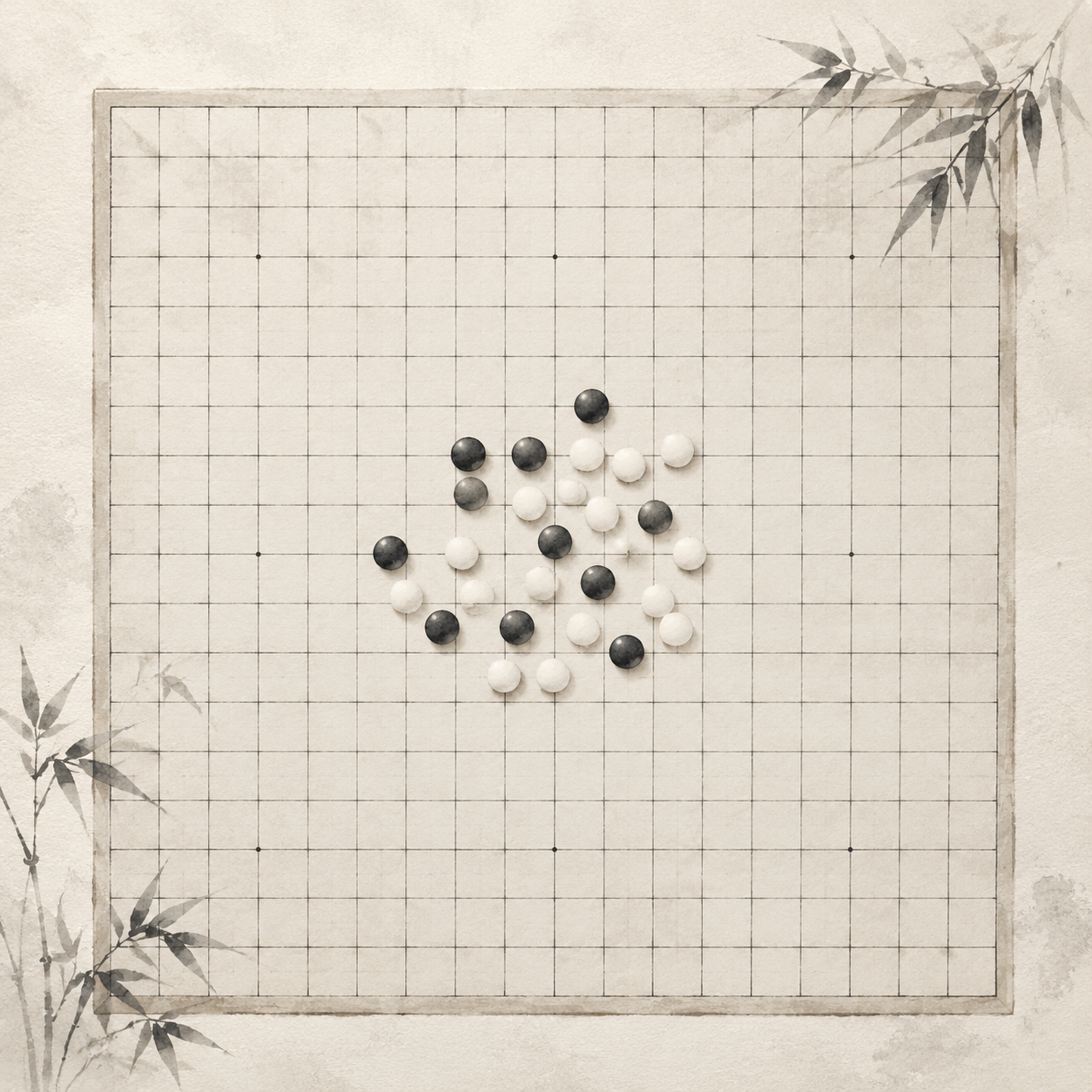
As a spectator, this changes how you read the opening phase. A cluster of stones near tengen might look quiet, yet it could be baiting the opponent into taking a particular color; a diagonal line with a latent open three might simply be sculpting space for what comes later. Swap 2 converts the question of who moves first from a blunt advantage into a layered problem, part psychology, part layout, part judgment.
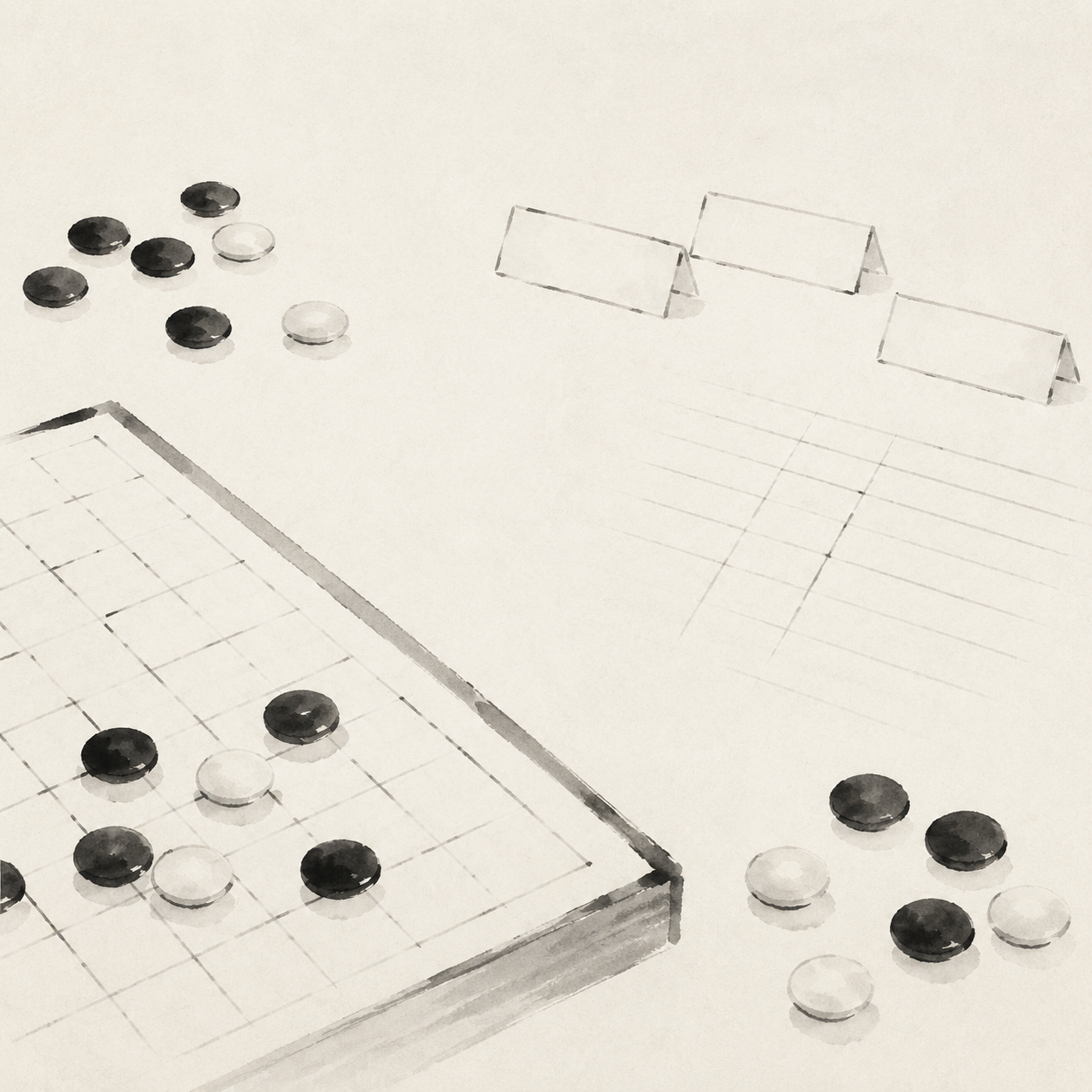
The most interesting moment often happens before anyone plays.
Four boards and two substitutes reshape what winning looks like
The RIF announcement specifies four players per team, plus up to two substitutes. That number is precise, and it carries real drama. When four boards run simultaneously, the match is no longer one person in deep thought, it's an entire team breathing across different positions at once.
You start noticing things that individual events don't surface: whether Board 1 is absorbing the toughest opponent, whether Board 4 is tasked with steadying the score, whether a substitute enters because someone is flagging physically or because the matchup on a particular board demands a specific style. Team play rewrites the objective from "win a game" to "manage four boards together."
This gives watching an extra dimension. If a player on one board chooses a conservative line, it isn't necessarily timidity; if another board pushes into a four-in-a-row sequence early, it isn't necessarily recklessness. Both might be serving the same read on the score: press this round, or hold.
Yerevan gives the schedule a specific light
Location changes the imagination around a tournament. The event page identifies the venue as Chess House at 50a Khanjyan Street in Yerevan, Armenia, and notes that YSU Guest House is within walking distance. Those details are small, but they shift a distant competition from "some international event" into a schedule you can actually picture arriving at.
When you know players might walk from their lodgings to the playing hall, when you can see that August 15 through 19 will be filled round by round, the tournament stops being a column of results. It has mornings of preparation, afternoons of post-game review, quiet evenings when teams sit together to sort out board assignments for the next day.
The roster announcement is when a distant event becomes real
When only an international announcement exists, the tournament still feels like a poster on a future wall. It becomes a real countdown the moment national associations start naming players. The Japan Renju Association's announcement of its team for the 14th Team World Championship, published June 6, 2026, was one of those moments.
A roster isn't gossip, it's the entry point into the narrative. From a team's composition you can read the ratio of veterans to newcomers, whether the association prioritizes consistency or volatility, and how that country understands team play within either the Gomoku or Renju tradition.
By that point, the event is no longer simply "happening in Armenia in August." It has become a line that sharpens in stages: the RIF announcement establishes the frame, the registration deadline forces decisions, the event page fills in rules and venue, and national rosters put actual people into the story.
Long time controls let the team format keep its depth
The time control listed in the announcement is 120 minutes per player, plus 30 seconds per move. That's a measured pace, and it suits team play well. It gives players room to stop in a complicated position, re-examine whether a line actually holds, rather than being pushed along by speed.
For spectators, slow doesn't mean dull. Slow means you have time to watch an open three get suppressed, a double-three threat get dismantled before it matures, a seemingly routine defensive move quietly lift the score pressure on another board. The precision of a team event tends to live in exactly these unhurried details.
Slow down, and winning gets texture.
Why this tournament deserves a spot on your calendar now
What's compelling about the 2026 World Team Gomoku Championship isn't the promise of a star-studded field. More precisely, it breaks a tournament into many watchable stages: the official announcement, the registration close, the rules confirmation, the teams taking shape, the city becoming a destination, board assignments, five days of play. Every step is a piece of groundwork laid on the board.
That's also why team events outlast individual ones as pure spectacle. Individual tournaments tend to narrow the frame onto a single champion; team events ask you to watch a group of people absorb risk together, someone pressing, someone containing; someone holding on at Board 1, someone keeping half a point of hope alive at Board 4.
So before the first stone is actually played, this tournament has already begun. A few anchors worth keeping: the RIF announcement of May 9, 2026; the Swap 2 Gomoku team event running August 15-19, 2026; a roster of four starters and up to two substitutes per team; and Japan's team announcement on June 6, 2026. Together they turn Gomoku from a results table into something you can watch arriving, slowly, from the start.
When August gets close, pick one round and watch it seriously. Or set up a Swap 2 game on your own board, feel what it's like when the story has already started and no one has attacked yet.